

By MoT
Phnom Penh. Despite the many challenges and crises facing Cambodia’s tourism sector, the industry continues to demonstrate resilience and steady progress. This development has been driven through efforts to enhance the quality of tourism destinations, strengthen the “Clean City, Clean Resort, Good Service, Good Hospitality” campaign, and promote cleanliness and greenery across cities and districts nationwide in order to improve Cambodia’s beauty, environment, and attractiveness.
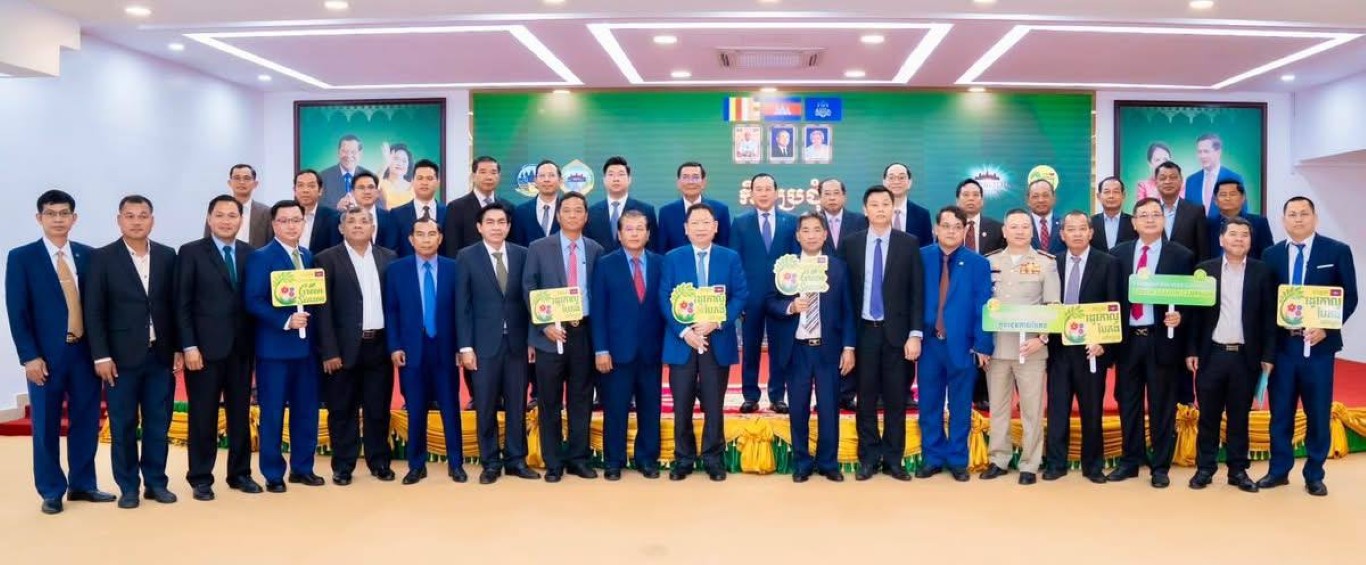
With the high approval of Samdech Moha Borvor Thipadei Hun Manet, Prime Minister of the Kingdom of Cambodia, to continue implementing the Clean City Contest Movement, H.E. Huot Hak, Minister of Tourism and Chairman of the National Committee for Clean City Assessment, presided over the first meeting of the National Committee for Clean City Assessment to further promote the implementation of the Clean City Contest mechanism.


This initiative is a valuable legacy of Samdech Akka Moha Sena Padei Techo Hun Sen, former Prime Minister and current Acting Head of State and President of the Senate of the Kingdom of Cambodia, and continues to receive high attention from Samdech Moha Borvor Thipadei Hun Manet, Prime Minister of the Kingdom of Cambodia and Honorary Chairman of the National Committee for Clean City Assessment.
This important meeting, held this morning, was attended by H.E. the Permanent Secretary of State of the Ministry of Tourism, Excellencies, Lok Chumteavs serving as Vice Chairpersons, members, and the working group of the General Secretariat of the National Committee for Clean City Assessment, with a total of 68 participants at the Ministry of Tourism.
On this occasion, H.E. the Chairman of the National Committee for Clean City Assessment expressed his deep appreciation and gratitude for the achievements of H.E. Dr. Thong Khon, Senior Minister, who initiated and promoted the implementation of the Clean City Contest Campaign since its first launch on February 27, 2012. Over nearly 14 years, this initiative has significantly transformed cities and districts across the country at both national and regional levels.
At the same time, H.E. the Chairman highlighted that the key objectives of today’s first meeting were: 1). To introduce the composition of the Vice Chairpersons and members of the National Committee for Clean City Assessment; 2). To review the progress report of the National Committee for Clean City Assessment; 3). To examine the results of the 4th Clean City Assessment for the validity period of 2026–2029 before respectfully submitting them to the Head of Government for final review and decision; and 4). To review several work activities to be implemented in 2026.
H.E. the Chairman further stated that the Clean City Assessment results are based on 7 main indicators, 41 sub-indicators, and 113 evaluation criteria. The assessment is conducted according to Clean City standards and based on three approaches: 1). Reviewing past achievements from the 3rd Clean City Assessment, based on the principle that the development of candidate cities and districts must move forward rather than backward; 2). Reviewing additional supporting documents newly submitted by candidate cities and districts; and 3). Conducting further on-site inspections according to each indicator.